
• Force sensing technology

    Force sensing technology is being used more and more

Force sensing resistor

Force sensing technology is being used more and more, Ultra-thin and soft,
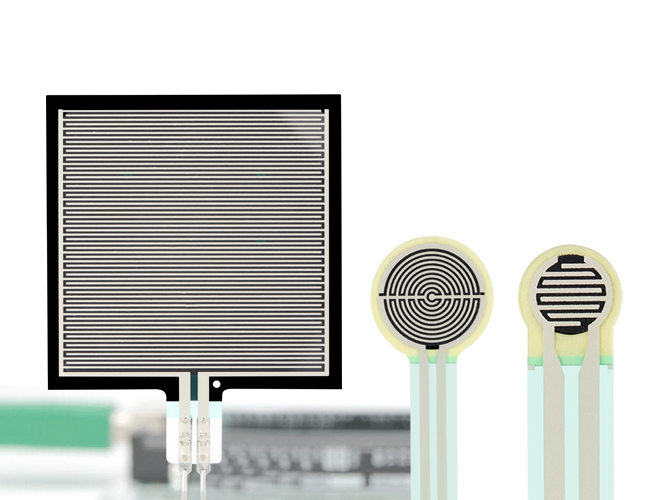
The Force sensor (FSR sensor) is composed of polyester film with excellent
comprehensive mechanical properties, highly conductive materials,
and nano-level pressure-sensitive materials

Pressure Sensitive Material

The bottom layer is a flexible film and a conductive layer laminated thereon,
and the top layer is a flexible film and a pressure-sensitive material
laminated thereon. The two are bonded by double-sided tape, and the sensing
areas of the upper and lower layers are isolated.

Force Sensor

How does the Force Sensor work?

Sensing layer

pressure-sensitive nanomaterial

Electrode layer

highly conductive material compounded on polyester film

Isolation layer

double-sided adhesive paste and isolation

Force sensing area

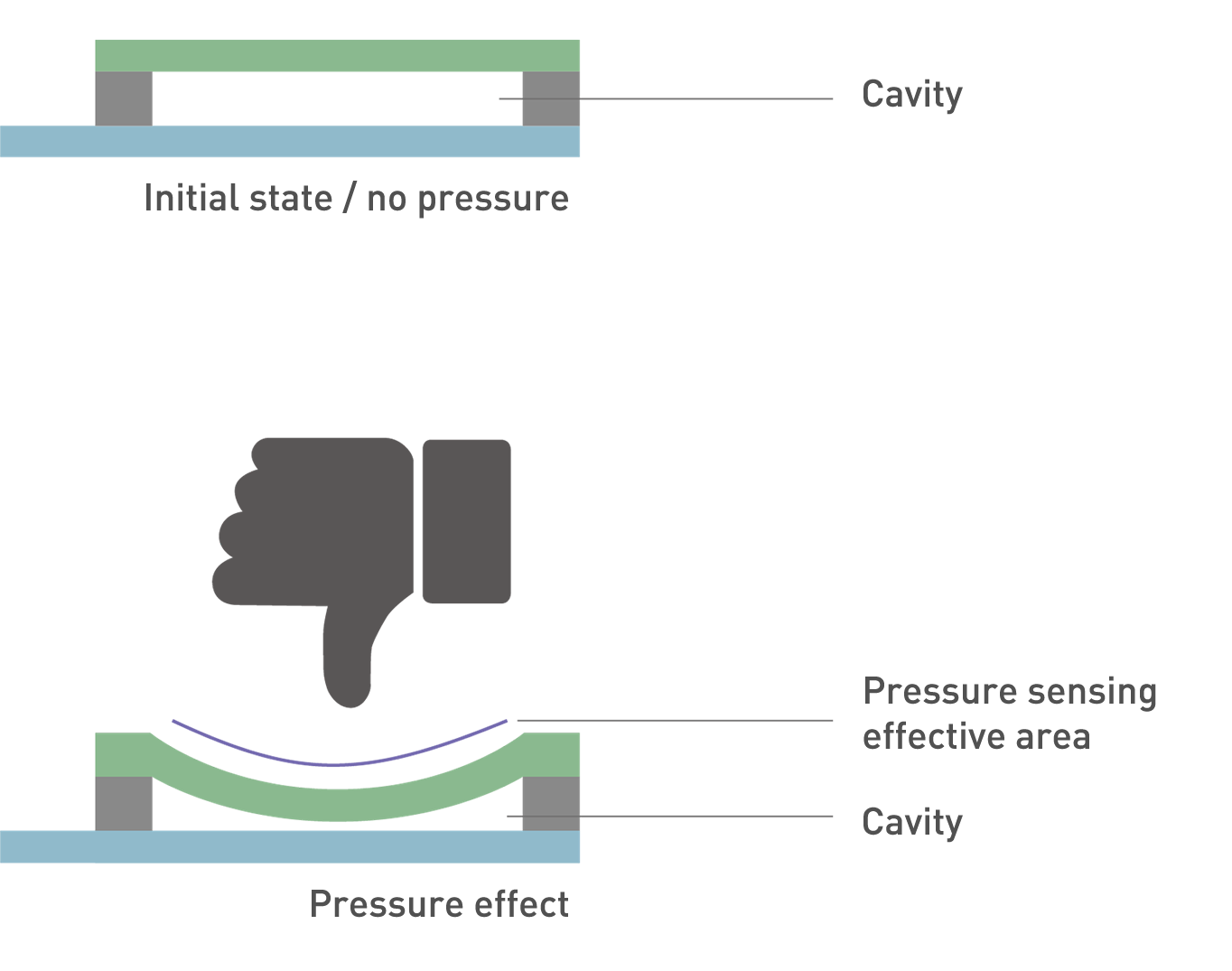
When the force sensing area is pressed, the disconnected lines at the bottom layer will be conducted through the pressure-sensitive layer on the top layer, and the resistance output value changes with the pressure

Force Sensor

Technical characteristics

Ultra-thin
Thickness 0.2mm Various
sizes

Strong weather resistance
Strong anti-interference ability,
Basically unaffected by temperature

Fast response
Millisecond response

Operation with gloves
Against the Covid-19, medical staff wear
gloves to reduce the spread of the virus

Durable
Pass the life test of 10 million
strokes with a 2kg weight

Low power consumption
The lowest resistance is less than 500Ω,
and the power consumption is less than 20mA

Competitive Product Comparison

Performance comparison

FSR sensorCapacitive sensorMEMS sensor
Flexible×
Ultra-thin×
No additional IC×
Low power×
Small space
Not need power during sleep×
use with gloves×
Excellent weather resistance××
Wide temperature range××
Ultra high sensitivity×
Over-range not damaged×